Highway Investment and Farm Freight: What's at Stake
Grain movement, road conditions, and rural infrastructure funding all shape what it costs to get an Alberta crop to market. Here is why freight is a bottom-line issue for producers.
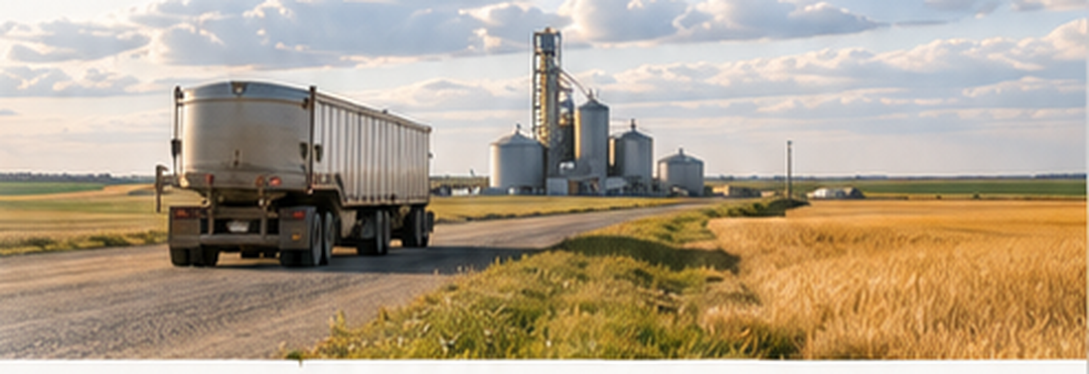
Every bushel of Alberta grain and every head of cattle has to travel before it earns a dollar. The condition of the province's highways, bridges, and rail connections decides how much of that journey shows up as a cost on the farm ledger.
As the October 2026 referendum focuses attention on how Alberta funds and manages its own priorities, transportation and infrastructure are moving up the list of practical concerns for producers, haulers, and rural municipalities alike.
Why Freight Is a Farm Issue
Freight is one of the largest controllable costs in agriculture. Industry groups estimate that transportation can account for a meaningful share of the delivered price of grain, and even small changes in fuel, road conditions, or routing can move margins for an entire operation.
For livestock producers, hauling distances to auction marts and processors add up quickly. For grain farmers, the reliability of the route to an elevator or port terminal can be the difference between hitting a delivery window and missing a contract.
Roads, Bridges, and Rail
Much of rural Alberta relies on secondary highways and municipal roads that were built decades ago and now carry heavier equipment than they were designed for. Aging bridges with load limits can force long detours for fully loaded trucks, adding hours and fuel to a haul.
Rail matters just as much. When railcar capacity is tight or bottlenecks build at interchange points, grain can back up on the farm and in country elevators. Predictable rail service and competitive rates are a recurring priority for producer organizations.
What Producers Should Watch
Infrastructure decisions are usually made years before their benefits show up in a hauling bill, so the choices being debated now will shape freight costs well into the next decade.
Watch for how road and bridge maintenance is prioritized in rural areas, whether investment keeps pace with the size of today's equipment, and how provincial and federal responsibilities are divided when it comes to trade-enabling corridors.
Where Investment Can Make a Difference
Better freight infrastructure does not require reinventing the system — it means maintaining and modernizing what producers already depend on.
 Maintain rural roads and bridges so fully loaded equipment can travel safely without long detours.
- Protect trade corridors that connect Alberta farms to export terminals and processing.
- Support competitive rail service with predictable capacity and rates for agricultural shippers.
- Coordinate provincial and municipal planning so investment reaches the routes producers actually use.
The Bottom Line for Producers
Freight is a cost that touches every farm and ranch, and infrastructure decisions made today will be paid — or saved — at the elevator and the auction mart for years to come.
Keeping Alberta's transportation network in good repair is one of the most direct ways to protect farm competitiveness.
Frequently Asked Questions
How much of a crop's value goes to transportation?
It varies by commodity, distance, and route, but industry estimates put freight at a significant share of the delivered price of grain — enough that changes in fuel or routing noticeably affect farm margins.
Why do bridge load limits matter to farmers?
Modern grain trucks and equipment are heavier than the traffic many rural bridges were built for. Load limits can force long detours that add fuel, time, and wear to every haul.
What can improve farm freight costs?
Maintaining rural roads and bridges, protecting trade corridors, and supporting competitive rail capacity all help keep the cost of moving Alberta products to market in check.